[ENGLISH BELOW]
เจาะลึกพื้นที่จริง! HOPESEA ร่วมกับ SPP CMU ลงพื้นที่ 3 จังหวัดภาคสนาม เก็บข้อมูลวิจัยเชิงรุกเพื่อแก้ปัญหา “เกษตรกรถูกบังคับย้ายถิ่นจากภัยพิบัติจากการเปลี่ยนแปลงสภาพภูมิอากาศ”

ตลอดหลายเดือนที่ผ่านมา ทีมงานนำโดย ผศ.ดร. ธิดา ไชยปะ อาจารย์ประจำสถาบันนโยบายสาธารณะ มช. และหัวหน้าหน่วยวิจัย HOPESEA ร่วมกับ ผศ.ดร. บัณฑูร พานแก้ว อาจารย์ประจำคณะวารสารศาสตร์และสื่อสารมวลชน มหาวิทยาลัยธรรมศาสตร์ ตลอดจนทีมกระบวนกร SPP-CMU และทีม UNOSAT ได้ผนึกกำลังเป็นแกนนำหลักในการดำเนินโครงการ “Towards Just and Sustainable Land Allocation for Farmers Displaced by Climate Change in Southeast Asia” โดยได้รับการสนับสนุนจาก IDRC ประเทศแคนาดา

พื้นที่และกระบวนการวิจัย
เราเริ่มต้นด้วยการพัฒนาแผนที่ความเสี่ยงการย้ายถิ่นฐานจากภัยภูมิอากาศด้วยระบบสารสนเทศภูมิศาสตร์ (GIS) เพื่อค้นหาพื้นที่วิกฤต (Hotspots) จากนั้นทีมงานได้ลงพื้นที่ภาคสนามอย่างเข้มข้นใน 3 จังหวัดที่เป็นตัวแทนของภัยพิบัติที่แตกต่างกันในประเทศไทย:
- จังหวัดน่าน — ภัยดินโคลนถล่มและน้ำป่าไหลหลาก
- จังหวัดชัยภูมิ — ภัยแล้ง
- จังหวัดพระนครศรีอยุธยา — ภัยน้ำท่วม

 เปิดสถิติการลงพื้นที่:
คณะนักวิจัยและทีมงานได้เก็บข้อมูลแบบสอบถามครัวเรือนมากกว่า 1,200 ชุด จัดการสนทนากลุ่ม (Focus Group Discussions) และสัมภาษณ์เชิงลึกกับชุมชนที่ได้รับผลกระทบ เพื่อทำความเข้าใจว่าวิกฤตสภาพภูมิอากาศส่งผลอย่างไรต่อวิถีชีวิต การตัดสินใจย้ายถิ่น ความมั่นคงในที่ดินทำกิน และขีดความสามารถในการปรับตัวของเกษตรกรไทย
 จากงานวิจัยสู่การปฏิบัติ
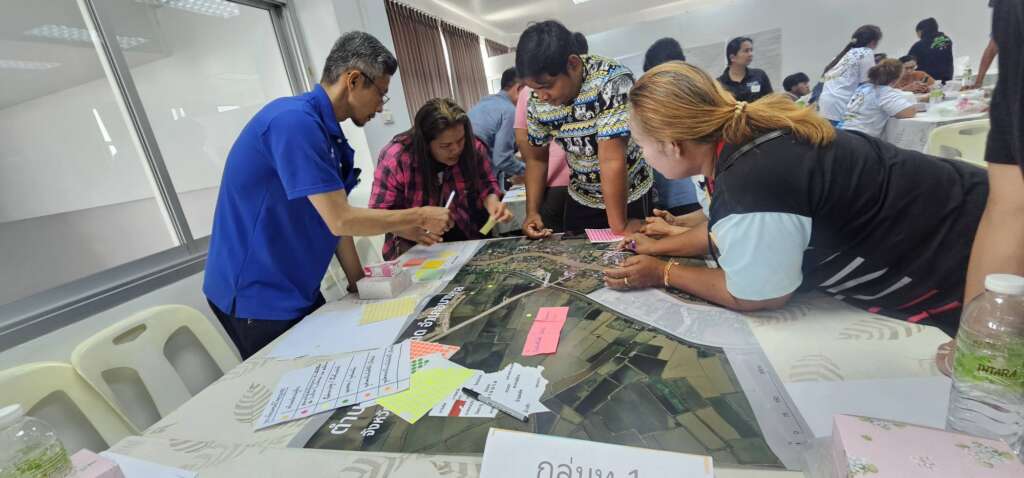
เพราะงานของเราไม่ได้จบแค่การเก็บข้อมูล! เราได้ร่วมมือกับ เครือข่ายความร่วมมือเพื่อความร่วมมือไทยต้านภัยพิบัติ (TNDR) จัดเวทีประชุมเชิงปฏิบัติการนโยบายผู้บริหาร (Executive Policy Workshops) ในทั้ง 3 จังหวัด เพื่อนำผลวิจัยและเรื่องราวจากพื้นที่จริง (Community Personas) ไปร่วมกันออกแบบอนาคตและแผนปฏิบัติการผ่าน 3 มิติสำคัญ ได้แก่
- นโยบายเชิงป้องกัน (Preventive)
- นโยบายเชิงปรับตัว (Adaptive)
- และนโยบายเชิงเปลี่ยนผ่าน (Transformative)


 ได้รับเกียรติและความร่วมมือจากระดับนโยบายสู่ท้องถิ่น:
โครงการนี้ได้รับเกียรติและรับการสนับสนุนอย่างดียิ่งจากผู้บริหารระดับสูง นำโดย:
นายเอนกชัย เรืองรัตนากร และ นายชนินทร์ รุ่งธนเกียรติ ที่ปรึกษารัฐมนตรีกระทรวงการพัฒนาสังคมและความมั่นคงของมนุษย์
รองผู้ว่าราชการจังหวัด จากทั้ง 3 จังหวัด
นายกเทศมนตรีเมืองชัยภูมิ และ นายกเทศมนตรีเมืองน่าน ที่มาร่วมรับฟังและให้ข้อเสนอแนะในการขับเคลื่อนนโยบายระดับท้องถิ่นอย่างใกล้ชิด

 ก้าวต่อไปของเรา:
ข้อเสนอนโยบายที่ได้จากกระบวนการนี้ จะถูกผลักดันต่อในระดับชาติเพื่อขับเคลื่อนการเปลี่ยนแปลงเชิงนโยบายที่กว้างขึ้น ในด้านการปรับตัวต่อสภาพภูมิอากาศ การลดความเสี่ยงจากภัยพิบัติ และการจัดการย้ายถิ่นฐานอย่างเป็นระบบในประเทศไทย
เพราะเราเชื่อมั่นว่า นโยบายภูมิอากาศที่ดีต้อง “มีประชาชนเป็นศูนย์กลาง ใช้หลักฐานเชิงประจักษ์ เปิดโอกาสให้มีส่วนร่วม และมองไปข้างหน้าเพื่ออนาคต”


 Going Deep into the Field!
HOPESEA and SPP-CMU Conduct Large-Scale Field Research Across Three Thai Provinces to Address Climate-Induced Farmer Displacement
Over the past several months, a research team led by Asst. Prof. Dr. Thida Chaiyapa from the School of Public Policy, Chiang Mai University, and Head of HOPESEA, together with Asst. Prof. Dr. Banthoon Phankaew from the Faculty of Journalism and Mass Communication, Thammasat University, as well as facilitators from SPP-CMU and the UNOSAT team, have jointly served as the core driving force behind the project:
“Towards Just and Sustainable Land Allocation for Farmers Displaced by Climate Change in Southeast Asia,” supported by the International Development Research Centre (IDRC), Canada.
The project began with the development of GIS-based climate displacement risk maps to identify critical climate mobility hotspots. Based on these findings, the research team conducted intensive fieldwork in three provinces representing different climate disaster contexts in Thailand:
• Nan Province — landslides and flash floods
• Chaiyaphum Province — drought
• Phra Nakhon Si Ayutthaya Province — flooding
Fieldwork Highlights:
The research team collected more than 1,200 household surveys, conducted Focus Group Discussions (FGDs), and carried out in-depth interviews with affected communities to better understand how climate change impacts livelihoods, mobility decisions, land tenure security, and the adaptive capacities of Thai farmers.
From Research to Action: Collaborating with TNDR to Drive Policy Innovation
Our work did not stop at data collection. In collaboration with the Thai Network for Disaster Resilience (TNDR), we organized Executive Policy Workshops across all three provinces to bring research evidence and community stories directly into policymaking processes.
Using survey findings, community personas developed from in-depth interviews, and future scenario-building exercises, participants collaboratively designed future pathways and action plans across three key dimensions:
• Preventive policies
• Adaptive policies
• Transformative policies
Strong Support from National and Provincial Leaders
This initiative received strong support and participation from high-level policymakers and local authorities, including:
- Mr. Anekchai Ruengrattanakorn and Mr. Chanin Rungthanakiat, Consultants to the Minister of Social Development and Human Security of Thailand
- Deputy Governors from all three provinces
- The Mayors of Chaiyaphum Municipality and Nan Municipality, who joined the discussions and provided recommendations for strengthening local-level policy responses
Moving Forward
The policy recommendations generated through this process will be elevated to the national level to help drive broader policy transformation on climate adaptation, disaster risk reduction, and planned relocation in Thailand.
We strongly believe that effective climate policy must be:
People-centered, evidence-based, participatory, and future-oriented.

