Culture, Creative-Economy and Climate Adaptation in Chiang Mai
Author: Parni Ray
Advisor: Narut Charoensri
Problem Statement
Thailand’s UNESCO-inspired Creative-Economy and Creative-City policies, imagine Creative Districts as engines of economic development. In Chiang Mai, this limits the recognition of cultural spaces as social infrastructure for urban climate adaptation.
Introduction
Like all cities Chiang Mai in northern Thailand straddles several identities. We focus on two.
First, its susceptibility to climate change. Situated in the Chiang Mai–Lamphun Basin and surrounded by high mountain ranges, Chiang Mai is topographically vulnerable to flooding and prone to the seasonal entrapment of air pollutants. The city’s annual smog problem has now been found to be aggravated by rising heat (Chotamonsak & Lapyai, 2020). All of this is compounded by the combined pressure of Chiang Mai’s rapid urbanisation, construction and tourism led development.
Second, Chiang Mai is a UNESCO Creative city. It joined the UNESCO Creative City Network (UCCN) in 2017. UNESCO’s creative city policy has shaped Chiang Mai’s cultural governance over the past decade in a variety of ways. Municipal governance has pivoted towards the local Lanna identity heritage preservation practices. Private public partnership platforms, such as Creative Chiang Mai have been established as a hub for creative industries. Local city policies have shifted towards promoting ‘creative tourism’.
In 2020 Creative Economy Agency (CEA), the central body in charge of operationalizing Thailand’s creative economy strategy, started promoting the ‘Creative District’ model as a key mechanism for creative-city development. The Chiang Mai Old City (inner moat), stretching over 2.56 square kilometers, was identified as the ‘Creative District’ area in Chiang Mai soon after.
The Creative-City and the Creative district model
The “cultural turn” came to urban planning in North America and Western Europe in the ’80’s. It was a response to the crisis of Fordist industrial economies, deindustrialization, shrinking manufacturing sectors, and increasing interurban competition under globalization. As cities such as London, New York, and Glasgow sought new ways to attract visitors, investment, and consumption, ‘culture’ became a trump card. Increasingly it began being used as a means of distinguishing one city from another and strengthening their competitive position in the global urban economy. This redefined the role culture played, as a civic or public good in the city, recasting it instead as an economic resource tied to tourism, branding and urban image-making. The development of areas in the city as cultural zones – called ‘cultural quarters’, ‘precincts’ or, like in Chiang Mai, ‘districts’- became an established part of a city’s marketing. (Harvey, 1989; Zukin, 1987; Gilmore and Burnill-Maier, 2025)
The “Creative City” paradigm was distilled from these practices. It positioned culture, creativity and innovation as drivers of urban economic growth and may be traced back to UK’s new Labour govt. (1997-2008) which focused political attention on the so called ‘creative industries’. The move likely drew on a range of discussions, including Charles Landry’s book ‘The Creative City’ (1994) ‘The Rise of the Creative Class’(2002) by Richard Florida and ’The Creative Economy’ (2001) by John Howkins. All of these connected creativity, arts and design directly to economic value. The UK’s Department of Culture, Media & Sport (DCMS) also published the highly influential ‘Creative Industries Mapping Document’, which termed a whole mass of activities ‘creative’, and used the terms “cultural industries” and “creative industries” interchangeably, providing no concrete distinction between the two. This confusion haunts all subsequent policies using these concepts across the world. The idea of the creative-economy, creative/cultural industry soon extended from the UK “along the global trade routes of an ascendent neoliberalism” to the Netherlands and Nordic countries, to the countries of the former Eastern bloc”. The concept then leapfrogged to Hong Kong, Singapore, Taiwan. By the mid 2000’s both “Creative Economy” and “Creative Industries” were being promoted by UN agencies in Africa, South America and South-East Asia. (O’Connor, 2024)
UNESCO’s Creative Cities Network (UCCN) emerged amidst this, in 2004. Having long framed culture in terms of identity, heritage preservation, and cultural diversity, UNESCO began linking culture to creativity, development, and economic growth within global policy frameworks from the ‘90s onward. The creative-city creative-economy policies they inspired are often advanced on the grounds of generating employment, tourism revenue, international visibility, and investment.
Thailand adopted creative-economy as a national development strategy in the late 2000’s, formally establishing the National Creative Economy Policy Committee in 2010.
In Chiang Mai, the creative-city discourse became formalized through the Chiang Mai Creative City initiative around 2010 and internationally consolidated when the city joined the UCCN. One of the primary spatial expressions of the policy measures this inspired has been the development of the “Creative District” in the city’s heritage area.
Policy Problem
-
The Creative-City model is ill-suited to Chiang Mai
Scholars have long warned that despite being promoted as a transferable model, creative-city strategies often overlook local political, social and environmental conditions. Geographer Jamie Peck describes them as ‘mobile policy models’ which are adopted with little to no attention to local specificity. (Peck, 2005) Urban scholar Lily Kong, highlights the Global North orientation of creative city policies, which, she says, accounts inadequately for the cultural histories, and governance structures in the Global South.(Kong, L., & O’Connor, 2009) Sharon Zukin demonstrates how culture-led urban redevelopment – the core objective of the creative-city model – can transform neighbourhoods into sites of consumption, contributing to gentrification, displacement, and the commodification of local culture. (Zukin, 1995, 2010).
These critiques are all relevant to Chiang Mai. The city has long been associated with debates over decentralisation and regional autonomy. Tensions between Bangkok-centred governance and local aspirations often run high and the city’s governance context differs from the centralised model through which the creative city agenda is implemented. Historically Chiang Mai has been ethnically and culturally diverse (Lanna, Tai Yai/Shan, Hmong, Karen, Chinese, Muslim, among others). CEA’s creative city branding however does not acknowledge this complex cultural tapestry, choosing instead to centre on “Lanna identity” and thereby privileging one specific heritage narrative. CEA’s creative city plans similarly also does not state any climate adaptation objectives in its extensive literature on the official website, despite Chiang Mai being well known as a climate sensitive city. Instead its model centres on tourism, place branding, and cultural investment, overlooking the social infrastructure needed for climate adaptation.
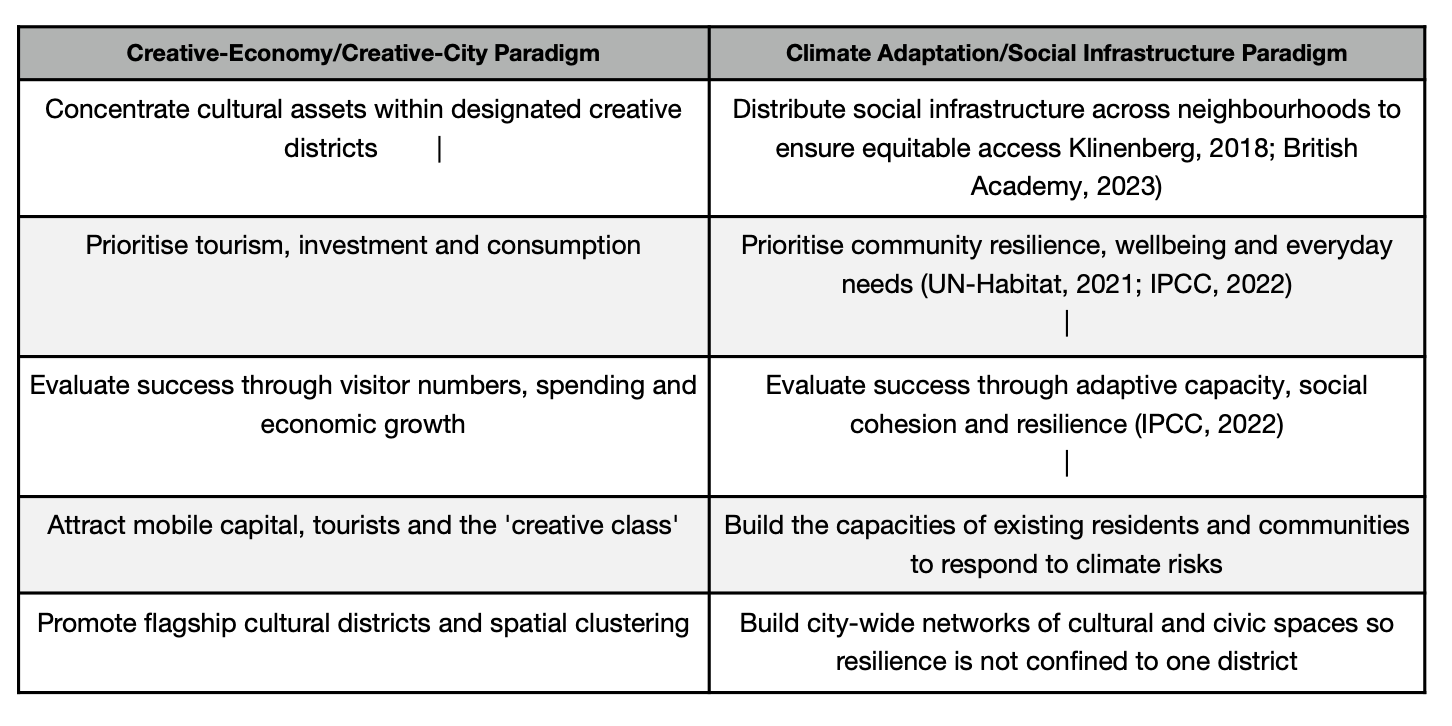
Table 1 summarizes the contrasting priorities of the creative-city/creative-economy paradigm and climate adaptation/social infrastructure paradigm being discussed
-
Chiang Mai’s Creative District concentrates investment producing uneven urban development
The Chiang Mai Old City (inner moat), stretching over 2.56 square kilometers, was identified as the ‘Creative District’ area in Chiang Mai. Studies on tourism gentrification in the city have identified social class replacement linked to hotel and accommodation expansion in this part of the city. (Chivakidakarn Huyakorn, 2019) The nearby Nimmanhaemin area has become heavily oriented toward digital nomad and lifestyle economies, with high concentrations of co-working spaces, boutique cafés, serviced apartments, and tourism-oriented commercial activity. All of these are results of intensified private investment in the area. This increase in investment has contributed to rising property prices and cost of living. There is growing concern over affordability, speculative investment, and the changing residential character of these neighbourhoods.
This pattern has previously been observed across numerous cities – Glasgow, Bilbao, San Francisco, Seoul, Singapore – where creative-city strategies have been implemented. (Bianchini, 1993; Evans, 2005; Chang, 2014; Gainza, 2017) Designated cultural/creative zones have been known to transform into gentrified, elitist enclaves, making them, and the cultural spaces they encompass, inaccessible to most in the city. Designed to be outward looking so as to attract tourists and encourage spending, these areas also invite real estate speculation, raising land and property prices as well as the cost of living in the area. Higher prices make life difficult for the original residents, often forcing them to move out, altering the area demographic and watering down local identity.
Special zones in cities also interrupt the spatial flow of a city, breaking social cohesion and creating unequal urban geography. If indeed creative/cultural districts prove successful in generating urban growth, then their spatial boundedness will restrict the benefits of this growth to that one part of the city. Rather than strengthening city-wide social cohesion and connectivity, they therefore risk producing fragmented urban landscapes in which access to resources, services, and community support is unevenly distributed during times of crisis. From a climate adaptation perspective, this may end up weakening a city’s overall resilience.
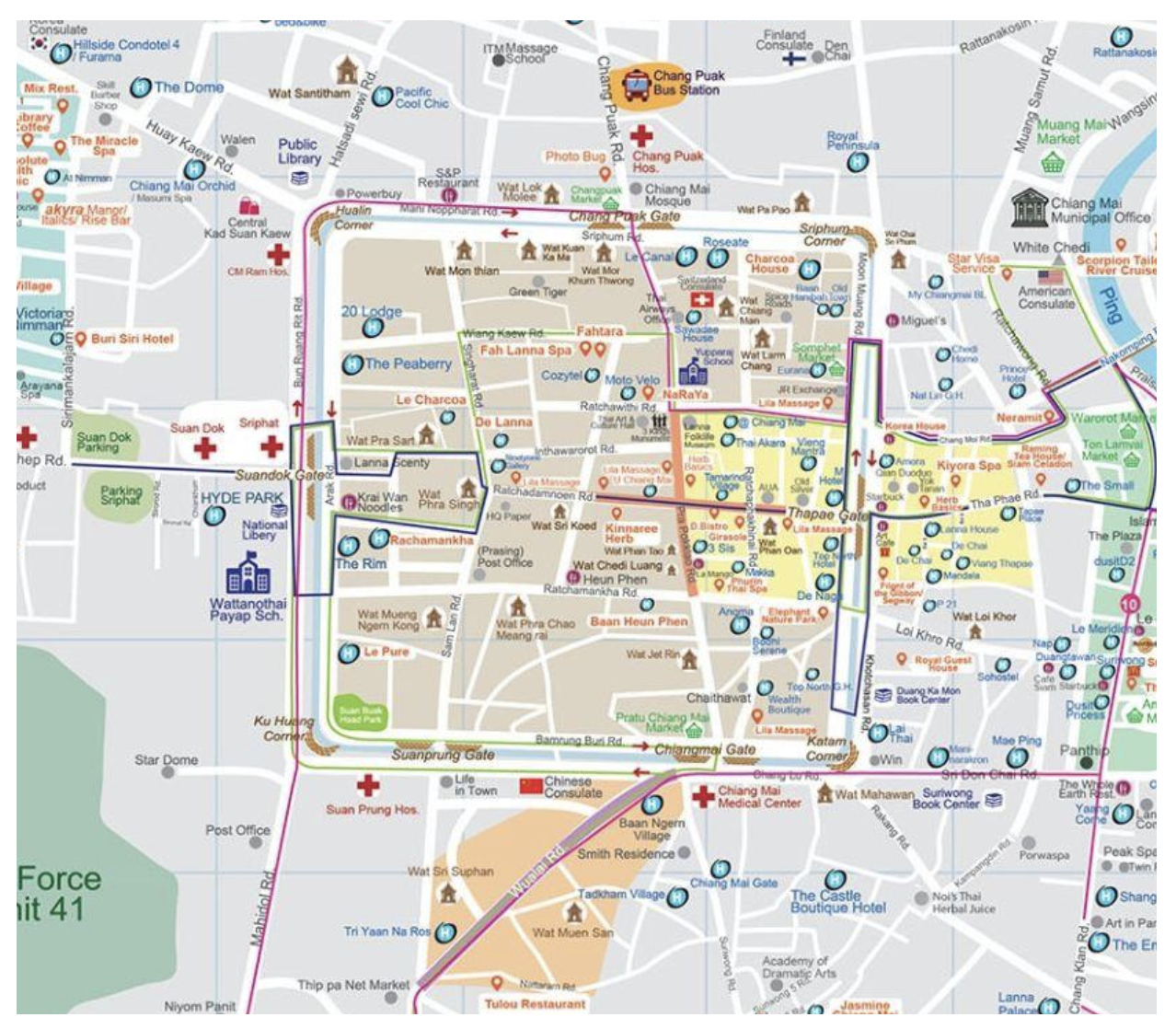
Fig 1. The historic centre of the city, corresponding roughly to the square formation on the city map, has been selected as the creative district of the Chiang Mai
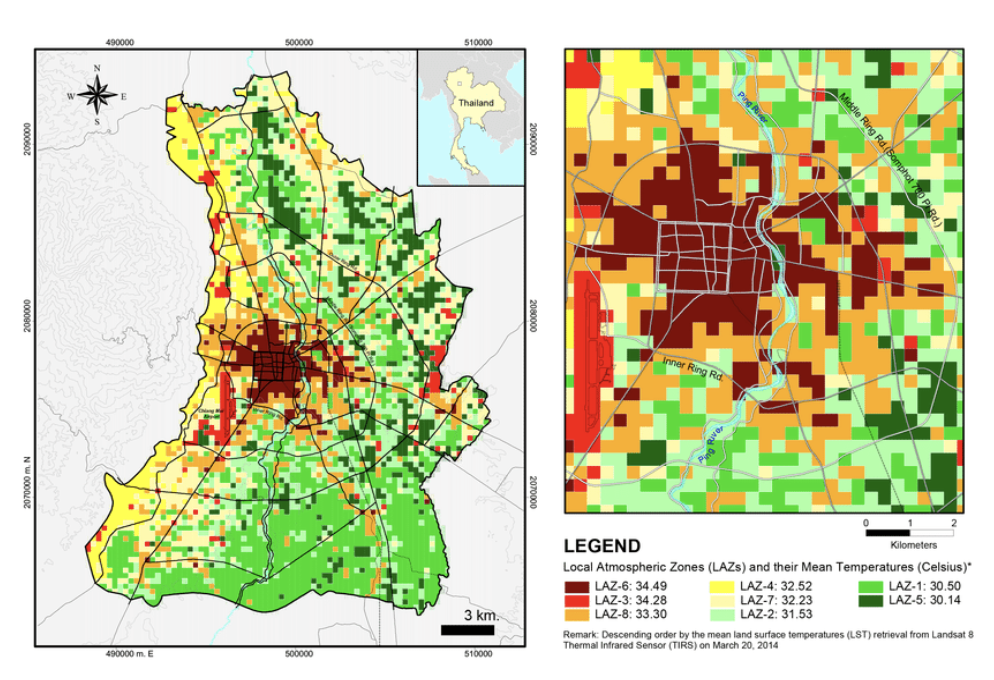
Figure 2. Urban thermal environmental map (UTEMap) of Chiang Mai City indicates that Chiang Mai’s historic core, shown in Fig. 1, coincide with areas of relatively high urban surface temperatures. This suggests that future planning for the district should integrate climate adaptation measures.
Note. Reprinted from Classifying spatial homogeneity of thermally-stabilized surface to define differentiation local atmospheric zones in Chiang Mai City, by M. Srivanit and S. Auttarat, 2016, Journal of Architectural/Planning Research and Studies, 13(1), pp. 1–22.
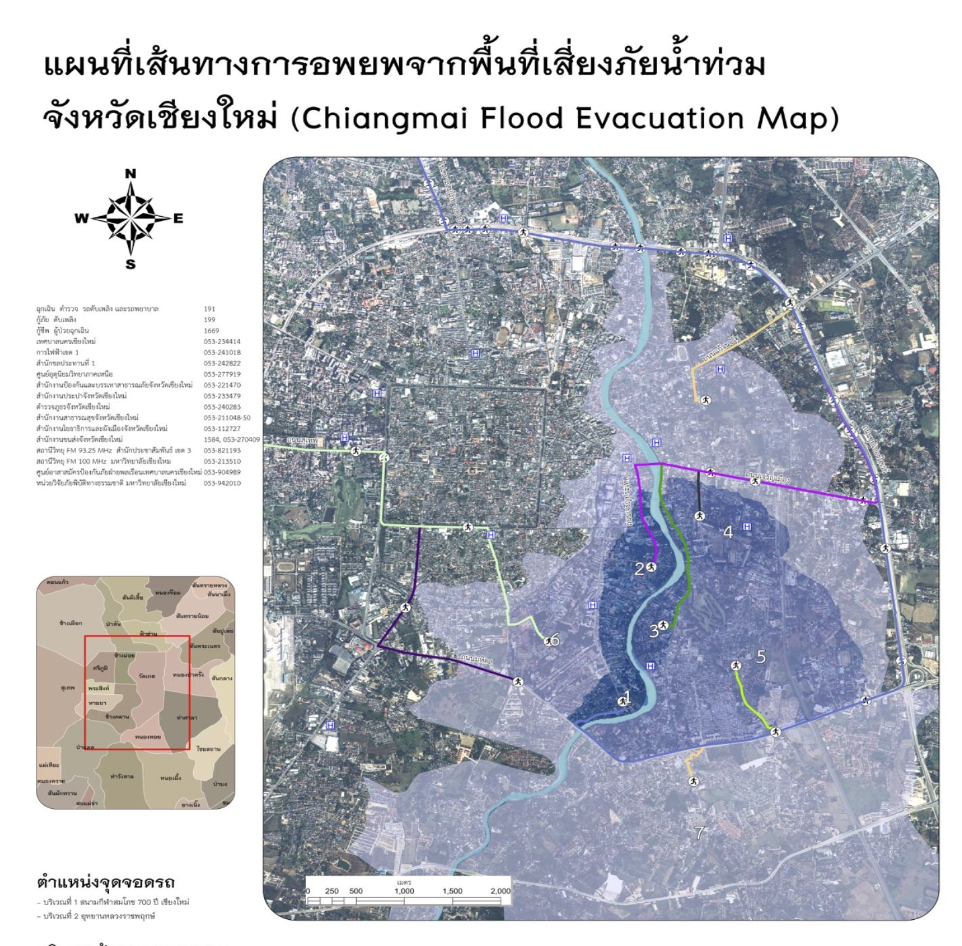
Figure 3. Flood evacuation routes for flood scenarios in Chiang Mai Municipality, published by Chiang Mai University, divides the city’s flood-prone area into seven primary zones, all of them outside the old city area designated as the creative district. In a city prone to flooding this already makes the area coveted for real estate speculation in the face of climate change induced disasters. Gentrification due to creative district classification might make it further inaccessible to the residents of the city.
-
Current Creative-District policy values culture primarily as an economic asset rather than social infrastructure
CEA’s official website literature defines creative districts as “a space that takes advantage of creativity”, “makes people see opportunity and possibility to do business in the area to increase spending, attract tourists and improve quality of life.” Generating “new economic wealth” and improving “competitiveness at both the district and city level” is stressed. The selection of the old city as the creative district is justified by pointing out that it accommodates ‘a large number of business operators, designers, and artisans who make products and services using creativity’. ‘This equips the area with the basic elements suitable for a creative district that can create economic opportunities for the locals’ texts on the website state.
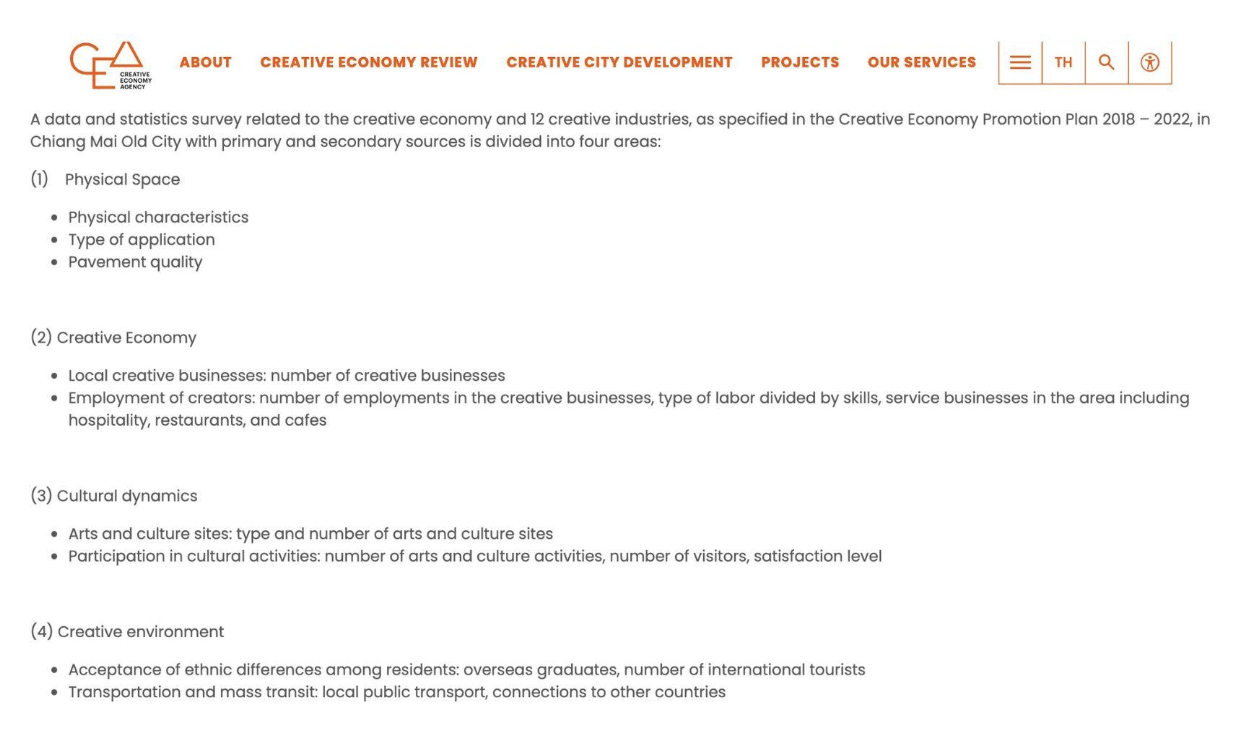
Fig. 4. A page from CEA’s website indicates the criteria by which the agency evaluates creative districts
But if creative districts are evaluated primarily through business activity, tourism, and economic growth, what about the social functions of cultural spaces? Implicitly CEA’s stated objectives make them secondary, if not redundant. Cultural spaces, such as the ones creative/cultural districts are designed to bundle together in one area, have repeatedly proved to play an important role in a city’s social infrastructure, most recently during the Covid-19 pandemic. Such spaces can support neighbourhood continuity, informal care systems, collective memory, mutual aid, and everyday forms of social cohesion. Research following the Covid-19 pandemic showed that such embedded social relations and shared community spaces played an important role in helping people cope with crisis, isolation, and uncertainty. (British Academy, 2021; Klinenberg, 2018)
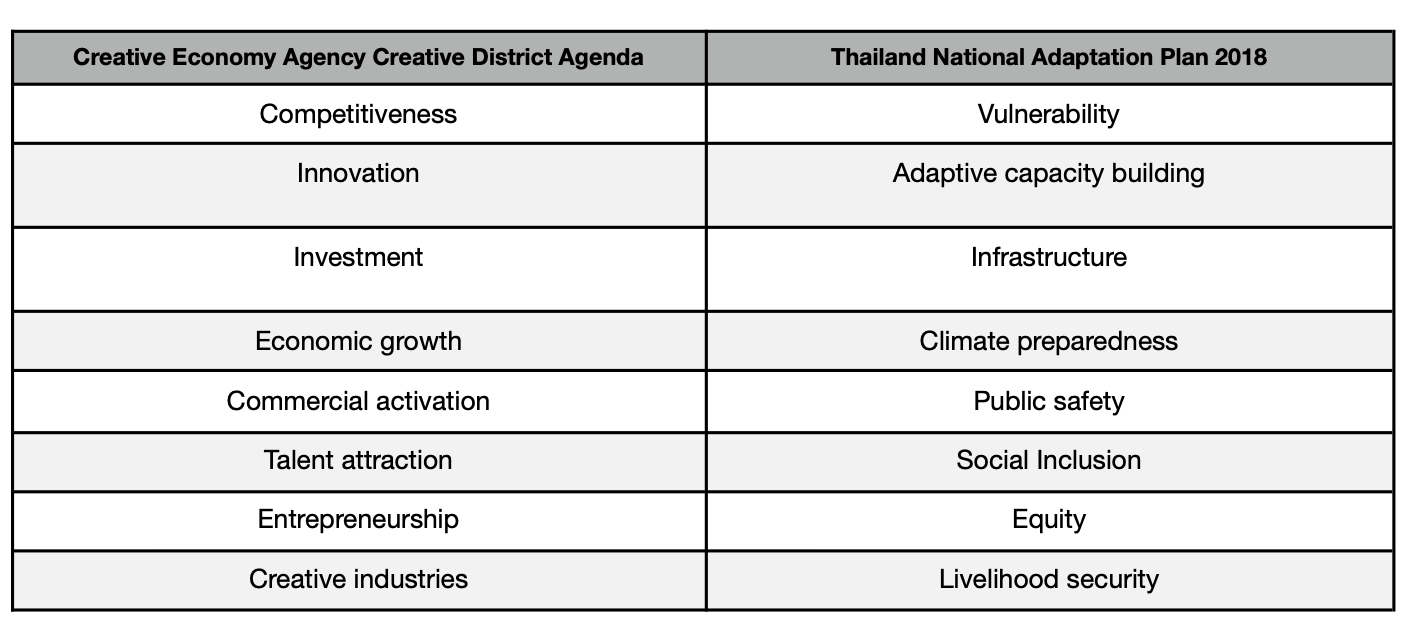
A predominantly economistic approach, operationalised in many creative-city and creative-district models, can undermine this infrastructural power cultural spaces hold in the local community. While technical systems and physical infrastructure is often prioritised in climate change preparedness, adaptation also depends on what the Intergovernmental Panel on Climate Change (IPCC) defines as adaptive capacity—”the ability of systems, institutions, humans, and other organisms to adjust to potential damage, to take advantage of opportunities, or to respond to consequences.” (IPCC, 2022) This relies heavily on social trust, collective organisation, local knowledge, and community cohesion, capacities that strong social infrastructures can help sustain. By evaluating cultural districts primarily through economic performance, current policy overlooks the contribution cultural spaces can make to adaptive capacity, social cohesion and neighbourhood resilience. This is made evident by the disparity in the vocabulary used in CEA’s
Table 2 Comparing policy language used in CEA’s creative district agenda literature and Thailand’s National Adaptation Plan