
Beyond the power cut, addressing theThailand energy policy to crack down on the online scam centers along border of Thailand and Myanmar

Author: Win Po Po Aung
Advisor: Thida Chaiyapa
Problem Statement
The Thai government implemented a “3 cuts” policy which is electricity, fuel, and internet supplies cutting down to specific border regions in Myanmar identified as hubs for scam centers on February 5, 2025. Provincial Electricity Authority cutting electricity to five key areas in Myanmar, specifically targeting Payathonzu town located in Mon State, two regions within Tachilek town in Shan State, and two sites in Myawaddy town, Karen State. The impact of these measures has been significant. Reports indicate a sharp decline in call center scam cases following the disruption of these services. After applying “3 cuts” policy, most of the civilian surfer a shortage of electricity, fuel and border trade.
The policy brief emphasizes a deeper understanding of why Thailand’s electricity cut policy is insufficient and the mitigation of civilian impact that is needed. In this policy brief focuses on Thailand energy policy on crackdown of online scam centers at Shwe Kok Ko, Myawaddy, Karen state.
Shwe Kokko, Myawaddy, is a famous online scam hub in Myanmar sharing a border with Thailand. This area operates online scam business with protection by Karen Border Guard Force (KBGF). After the crackdown of online scam hub in northern Shan State in Myanmar, Myawaddy become the largest online scam hub in Myanmar-Thailand border. Myawaddy relies on Thailand’s electricity, fuel supplies and telecommunication infrastructure. Myawaddy fully relies on Thailand electricity, alternative energy sources (solar, diesel generator) and telecommunication (starlink). It is a strategic location for Thailand energy policy intervention direct impact on scam hub.
The data used in this research is secondary data collection methods involve gathering information from existing sources which are Thailand, Myanmar and China government strategy, Thailand energy policy and procedure the crackdown of online scam centers, impact of civilian from media reports (article and interview), KBGF announcement and actions, human right reports, social media news and research papers. The policy brief will investigate below research questions.
- What is the impact of Thailand’s electricity disruption policy on both civilian populations and online scam operations in Myawaddy?
- How effective is the Thailand-China collaboration in combating online scam networks along the border?
- What alternative energy solutions are employed by online scam networks, and how do they adapt to government crackdowns.
Analysis and Discussion
What is Thailand’s “3 cuts” Policy?
In February 5, 2025, Thailand’s government took the unprecedented step of cutting electricity and fuel supplies to Myanmar. This policy negative impact on approximately 600 million baht ($17.84 million) per year in revenue that Thailand’s power authority had earned from the export.
Deputy Prime Minister emphasized that cutting power (and fuel/gas/internet) was urgently needed to stem the cross-border crime syndicates. A Leader of KBGF, Colonel Saw Chit Thu claims that he fully collaborated with Thailand authorities for crackdown on online scams centers.
Source of electricity in Thailand – Myanmar border areas
In 2023, Thailand exported a total of $168M in Electricity, primarily to Laos $104M, Burma $36.4M, and Cambodia $19.4M. Thailand’s cross‑border electricity exports have fluctuated sharply in recent years to Laos and Myanmar. UN Comtrade data (via WITS) show Thia exports to Myanmar were much smaller but steadier at below chart 1. On July 4, 1997, Thailand and Myanmar signed a Memorandum of Understanding (MOU) on purchasing electricity from Myanmar for 1,500 MWh. This MOU expired in 2010 and renewed a MOU related with electricity, water source management, hydropower projects by Thailand and Myanmar. Thailand and Myanmar have a longstanding agreement for natural gas cooperation, with Myanmar exporting natural gas to Thailand. Neither side has publicly disclosed the specifics of the new electricity agreements, including the crucial detail of how many megawatts Thailand is selling to Myanmar. This lack of transparency means we currently have no official information on the terms and regulations governing these deals. In figure 1 describe that Myanmar demand of electricity from Thailand is upwards. This figure state that Myanmar has a huge need for electricity imported from Thailand. The date of 2021 (coup year) is missing.
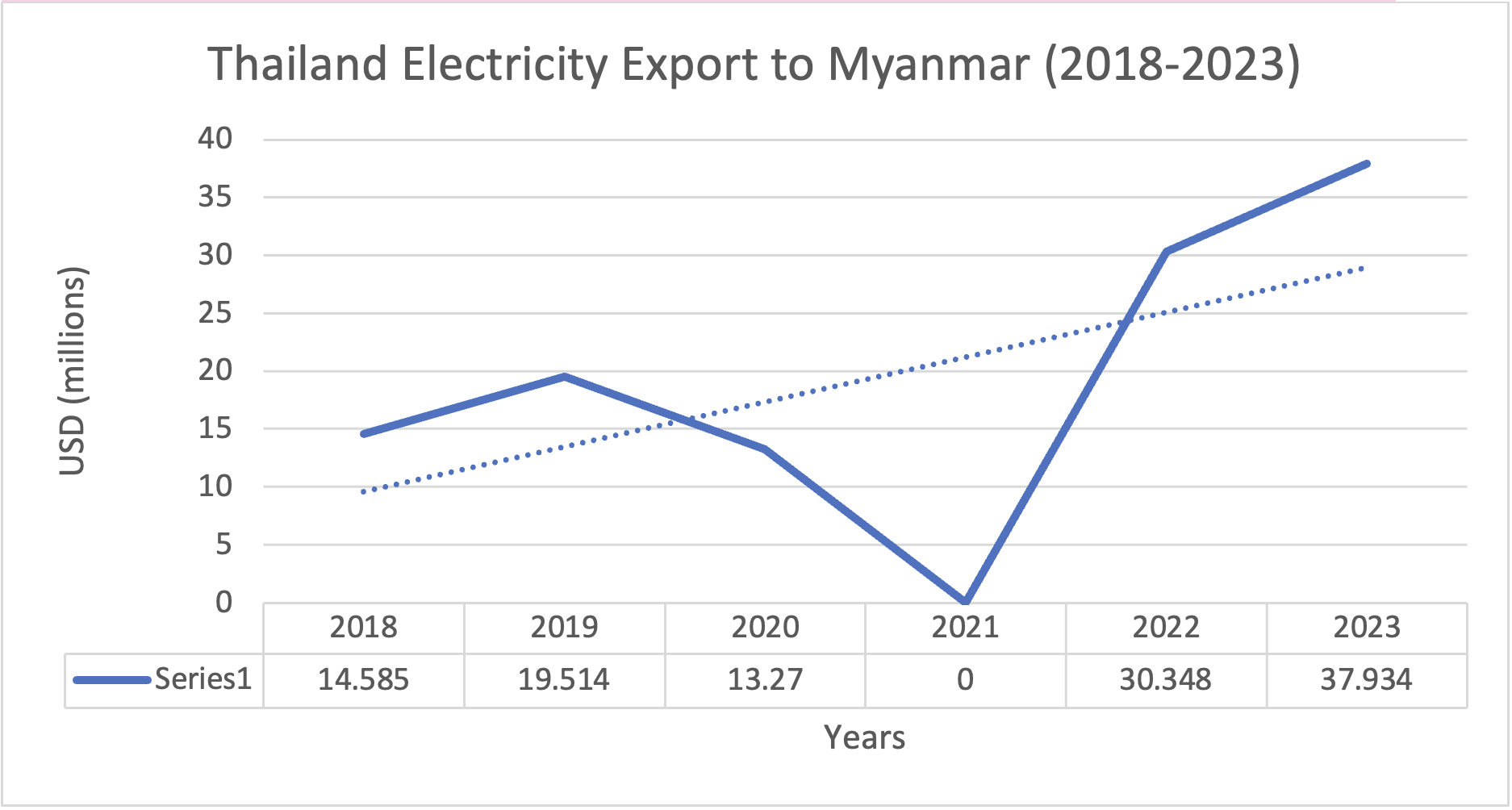
Figure 1. Thailand Export electricity to Myanmar
Source: UN Comtrade data (via WITS)
Impacts on Civilian Populations
Thailand’s power cutoff has had widespread effects on local civilian and border communities. Since conflict in December 2023, there was no formal electricity particularly outside of town, due to damage of a power. The biggest impact was the cut in fuel export. As a local resident mentions (Zaw H. H., 2025), “the decision has had severe unintended consequences for local residents, worsening fuel shortages and disrupting essential services”. The price of fuels is going up like a rocket after shutting down electricity in those areas. In practice, long queues formed at petrol stations in Mae Sot as thousands of Myawaddy residents crossed the border to buy fuel for generators. Schools, clinics and small businesses have had to rely entirely on backup batteries or generators, and some reported intermittent classes and service disruptions. Many civilian now rely on purchased diesel to run generators, straining household budgets. According to the Myanmar education calendar, February and March are designated exam periods for schools, making this an especially inappropriate time to implement such a strategy. Greater consideration must be given to the impact on the civilian population. Moreover, shutting down of border trade impact on small and media enterprises from Myawaddy and Maesot. Overall, the humanitarian impact is significant: local media warn that without mitigation (e.g. easing fuel supply for civilian), the policy risks hurting ordinary people more than the criminals.
Impacts on Scam Operations
Myanmar is on a blacklist in the Financial Action Task Force (FATF) for the hub of money laundering from 2022. International sanctions have been imposed on entities and individuals associated with these scams such as United State, European Union and United Kingdom sanctions on a leader of KBGF Colonel Saw Chit Thu, Chinese investor She Zhijiang and Colonel Saw Min Min Oo involved in the Shwe Kokko project (commonly known as KK Park).
Thailand’s power cut has not fully disabled the scam centers. (Zaw H. H., 2025) media found that, “seemed to be carrying on with no disruption” when Thailand temporarily cut power to Shwe Kokko and another Myawaddy site. Also, Mizzima media confirms that many Myawaddy compounds remain lit and functional despite the blackout, because they rely on alternative energy sources. Thai police estimate that between 50,000 to 100,000 people are still active in these scam hubs, which are part of a Southeast Asian network generating billions annually through fraudulent activities.
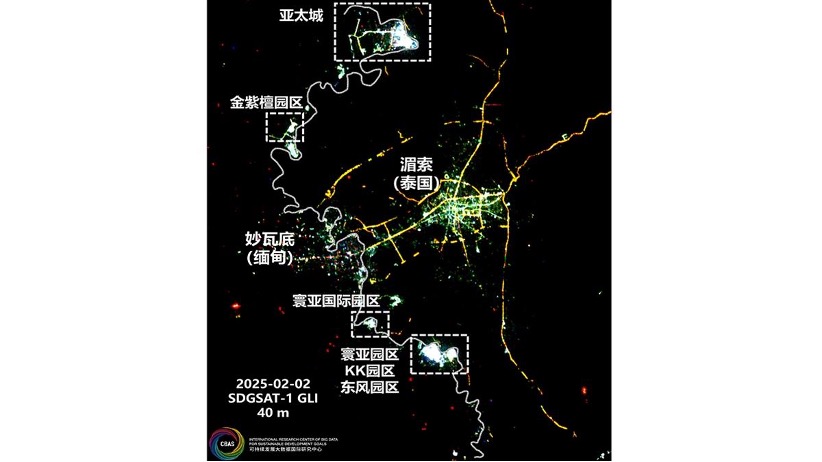
Image 1. Satellite images of the Myawaddy town in Myanmar captured on February 2, 2025 Photo: Courtesy of International Research Center of Big Data for Sustainable Development Goals at the Chinese Academy of Sciences, Source: Global Time
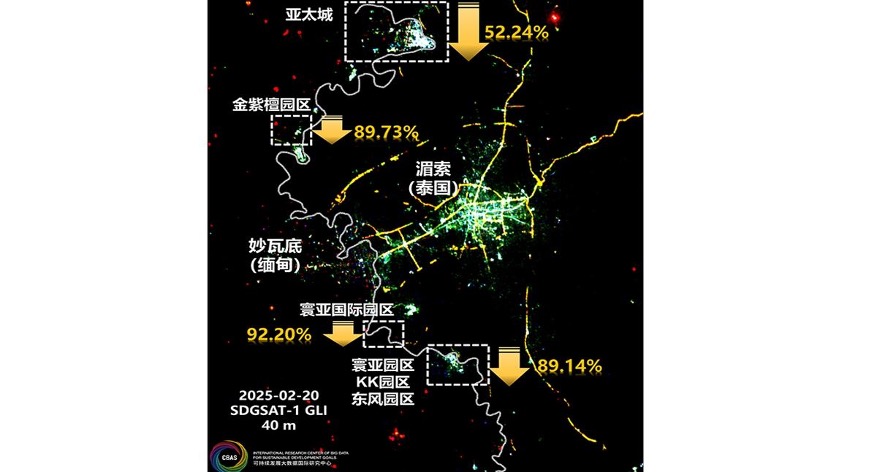
Image 2. Satellite images of the Myawaddy town in Myanmar captured on February 20, 2025 after Thailand started to cut “three supplies” Photo: Courtesy of International Research Center of Big Data for Sustainable Development Goals at the Chinese Academy of Sciences, Source: Global Time
The pictures clearly show a significant decrease in lighting in the four marked areas. On February 2, these spots were well-lit, but after the power cuts on February 20, the difference is obvious, with much less light. For instance, KK Park experienced a reported 89.14 percent decrease in lighting after the electricity cuts, with the other affected areas facing similarly significant challenges. According to the above images of before and after satellite images of lighting along border areas are significantly going down. It has an immediate positive impact on policy intervention collaboration with Thailand and China.
However, these scam operations have been adapted by employing alternative technologies to maintain their activities. Notably, satellite internet services, such as Elon Musk’s Starlink, have been utilized to circumvent local infrastructure disruptions.
Are scam hubs city have alternative energy solutions and adaptation?
Beyond adopting generators and solar panels, scam centers have pursued other adaptations. Many operators stockpiled fuel in advance. (Pinitwong, 2025) show that the power cut’s direct impact on the organized crime networks has been limited. (Zaw H. H., 2025) state that residents and ex-employees of the compounds confirm that many scam sites were already prepared with backup generators and solar arrays before the blackout. Restaurants, hotels, and casinos in these areas likewise maintain private generators and batteries. Thus, even as Thailand’s crackdown renews every few months, the scam networks seem willing and able to maintain enough alternate power to continue profiting.
A joint effort: China and Thailand target Myanmar’s rampant scam operations
Thailand’s electricity policy coincided with an unprecedented security partnership with China. Thai Prime Minister Paetongtarn Shinawatra and Chinese President Xi Jinping publicly vowed joint action against the scam networks. By February–March 2025, thousands of workers and suspects were rescued or detained. In total, roughly 10,000 scam workers (including Chinese, Thai and other nationalities) are reported to have been “rescued” or evacuated from the camps in early 2025.
While Thailand–China coordination has produced visible breakthroughs (mass rescues, closure of some facilities, arrests of traffickers), its long-term effectiveness is debated. Chinese and Thai officials themselves acknowledge that the effort must go beyond arrests to target the “root causes”. In practice, dismantling entire networks in a lawless region is difficult because many armed actors are play a vital role in this area.
The prolong ongoing armed conflict, political instability on the ground creates a complex situation for handling cross-border cybercrime and human trafficking in Myanmar. Karen State, in particular, is a complicated area with mixed control by the State Administration Council (SAC) and various Karen armed groups. While collaboration between Thailand and China has brought a temporary solution to this crisis, sustained efforts to crack down on online scams require the interest and cooperation of Myanmar authorities and armed groups. In the long run, without such support, online scams are likely to continue growing.
Recommendations
Over three months of “3 cut” strategy, it is significantly successful, it led to reduction of cross-border cybercrime and human-trafficking. Many of the online scams center entire shutting down and relocation. This policy claim that economically successful but consider of humanitarian impact is needed. The online scam centers sit at remote area and there is no embassies and lack of accessibly of Non-Governmental Organization (NGO) due to challenging conflict situation and special region (UNODC, 2023). There is lack access civil society organizations and NGOs to monitoring the online scam centers in those area. Therefore, suggest to create a Platform for Citizen Reporting policy. The policy emphasizes of awareness and citizen reporting of online scam activities, specifically for people in Myanmar, Thailand, and China. Authorities should also actively participate in this platform, using it as a real-time “monitor” to take necessary action and conduct operations. This platform represents a proactive, collaborative, and technology-driven policy approach to dismantle sophisticated online scam operations and protect citizens across the region.
In addition to national-level integration for example, Myanmar authorities and armed groups collaborate, second, regional collaboration, for example Thailand and Myanmar, should be establish a regional policy on crackdown cybercrime, human trafficking and fraud in Myanmar. This two-pronged approach integrating national efforts with strong regional policy is essential for creating a formidable front against sophisticated criminal networks that exploit jurisdictional gaps and regional instability.
Suggest to apply “Precision Harm Reduction” framework, states can maintain the effectiveness of their counter-crime efforts while upholding humanitarian principles, preventing civilian suffering, and fostering long-term stability and cooperation within affected communities in the future policy planning.
Conclusion
Myanmar’s pervasive political instability, armed conflict, and economic decline have created fertile ground for online scam operations, primarily orchestrated by Chinese investors. These illicit enterprises are actively gaining traction in vulnerable area, exploiting the prevailing lawlessness. While Thailand has implemented a “3 cuts” strategy to combat these scams, demonstrating considerable effectiveness as economically, it has unfortunately exacted a significant toll on civilian populations. Therefore, any future policy interventions must be meticulously crafted to mitigate adverse impactson innocent communities. It is paramount to safeguard villages, schools, and hospitals, which are vital hubs for local residents, from the unintended consequences of enforcement actions. Importantly, the policy option should be considered on the humanitarian of the civilian population.
References
- Banerjee, S. (2025, April 1). Observer Research Foundation . Retrieved from https://www.orfonline.org/expert-speak/thailand-s-cyber-scam-crackdown-a-temporary-fix
- Bangkok Post. (2025, January 31). Retrieved from https://www.bangkokpost.com/thailand/general/2951772/anutin-seeks-clarity-on-myanmar-power-cuts
- Bangprapa, M. (2025, May 9). Bangkok Post . Retrieved from https://www.bangkokpost.com/thailand/general/3021260/3-cuts-strategy-to-curb-call-centre-scamming-successful
- Brunwasser, M. (2025, March 4). Frontier Myanmar . Retrieved from https://www.frontiermyanmar.net/en/final-crackdown-thailand-moves-against-myanmar-cyber-scam-centres/#:~:text=Locals%20say%20the%20ban%20on,fallen%20because%20of%20the%20shortages
- Chongcharoen, A. P. (2025, February 5). Bangkok Post . Retrieved from https://www.bangkokpost.com/thailand/general/2954940/myanmar-towns-powered-down-but-not-out
- DVB English . (2025, February 14). Retrieved from https://english.dvb.no/a-qa-with-karen-border-guard-force-leader-saw-chit-thu/
- Eadsrichai, T. (2025, March 18). The Reporters’s. Retrieved from https://www.facebook.com/TheReportersTH/posts/pfbid02Sv9sg2cGm21XzA94k3byRePbWDSHA1frGEL54QWasDwX2sRJ3aodDFWwEN1NUD1wl
- Fawthrop, T. (2022, May 4). The Diplomat . Retrieved from https://thediplomat.com/2022/05/shan-state-exemplifies-chinas-tangled-myanmar-ties/
- Institute, S. A. (2024). Policy State of Play: Online Fraud in Southeast Asia .
- Irrawaddy. (2025, March 6). Irrawaddy . Retrieved from https://burma.irrawaddy.com/video/2025/03/06/398199.html
- Irrawaddy. (2025, March 12). Irrawaddy . Retrieved from https://burma.irrawaddy.com/article/2025/03/12/398442.html
- Kavi, M. (2025, March 19). Irrawaddy . Retrieved from https://www.irrawaddy.com/news/myanmar-china-watch/scam-centers-alive-and-kicking-in-shan-state.html
- Khaosod. (2025, February 16). Retrieved from https://www.khaosodenglish.com/news/2025/02/16/chinese-minister-visits-thai-myanmar-border-to-plan-mass-repatriation/?utm
- Maung, T. H. (2025, February 21). Irrawddy . Retrieved from https://www.irrawaddy.com/opinion/analysis/myanmar-juntas-hands-are-tied-in-scam-center-crackdown.html
- Maung, T. H. (2025, February 21). Irrawddy . Retrieved from https://www.irrawaddy.com/opinion/analysis/myanmar-juntas-hands-are-tied-in-scam-center-crackdown.html
- MSN. (2025, March 6). Retrieved from https://www.msn.com/en-ph/news/world/thailand-repatriates-hundreds-more-chinese-scam-centre-workers/ar-AA1AmtlJ
- Naing, I. (2023, November 20). VOA. Retrieved from https://www.voanews.com/a/myanmar-rebel-offensive-helps-china-s-cybercrime-crackdown/7362836.html
- OEC. (n.d.). Retrieved from https://oec.world/en/profile/bilateral-product/electricity/reporter/tha#bespoke-title-1135
- Olarn, N. G. (15, January 2025). CNN. Retrieved from https://edition.cnn.com/2025/01/14/china/china-actor-thailand-scam-myanmar-intl-hnk
- Ong, A. (2020). Shadow Capital at Myanmar’s Margins: Shwe Kokko New City. Singapore : YUSOF ISHAK INSTITUTE.
- Pinitwong, A. (2025, February 5). Bangkok Post. Retrieved from https://www.bangkokpost.com/thailand/general/2954940/myanmar-towns-powered-down-but-not-out#:~:text=Image%3A%20Electricity%20officials%20disconnect%20power,%28Photo%3A%20Assawin%20Pinitwong
- Ratcliffe, H. D. (2025, January 14). The Guardian . Retrieved from https://www.theguardian.com/world/2025/jan/14/wang-xing-chinese-actor-abduction-thailand-myanmar-scam-ntwnfb
- Reuters. (2025, March 18). Bangkok Post. Retrieved from https://www.bangkokpost.com/thailand/general/2982588/up-to-100-000-still-working-in-myanmar-scam-hubs
- Ring, Z. (2025, March 20). Irrwaddy . Retrieved from https://www.irrawaddy.com/opinion/guest-column/myanmar-juntas-failure-to-prosecute-scammers-erodes-sovereignty-rule-of-law.html
- Royal Thai Embassy, Anit-Human Trafficking Actions. (2025, January 8). Retrieved from https://www.thaianti-humantraffickingaction.org/Home/2025/01/08/actor-wang-xing-found-safe-after-being-lured-to-myanmar/
- SAKSORNCHAI, J. (2025, February 5). AP News . Retrieved from https://apnews.com/article/thailand-myanmar-scam-electricity-cut-0cfdfb57aa2e05e5835b1af3b4ac8e1a
- Sasha Jesperson, H. A. (2023). Trafficking for Forced Criminality: The Rise of Exploitation in Scam Centres in Southeast Asia. ODI.
- Thailand Development Research Institute . (2024, June 14). Retrieved from https://tdri.or.th/en/2024/06/securing-thailands-energy-future/
- The Nation. (2025, February 19). Retrieved from https://www.nationthailand.com/news/general/40046489
- Thepgumpanat, P. (2025, February 25). Reuters. Retrieved from https://www.reuters.com/world/asia-pacific/thailand-cut-power-myanmar-border-areas-linked-scam-centres-2025-02-04/?utm
- (2024). Transnational Organized Crime and the Convergence of Cyber-Enabled Fraud,Underground Banking and Technological Innovation in Southeast Asia: A Shifting Threat Landscape. United Nations Office on Drugs and Crime (UNODC).
- UNODC. (2023). Casinos, cyber fraud, and trafficking in persons for forced criminality in Southeast Asia. Bangkok: United Nation Office on Drugs and Crime.
- Wei, H. Y. (2025, February 26). Global Time . Retrieved from https://www.globaltimes.cn/page/202502/1329099.shtml
- WILSON, P. M. (2023, November 23). Reuters. Retrieved from https://www.reuters.com/investigates/special-report/fintech-crypto-fraud-thailand/
- WU, H. (n.d.). AP. Retrieved from https://apnews.com/article/paetongtarn-shinawatra-xi-jinping-china-thailand-4373663d592835f6c8eea41ea06f2e0b?utm
- Zaw, H. H. (2025, February 13). Mizzima . Retrieved from https://eng.mizzima.com/2025/02/13/19142#:~:text=While%20Thailand%E2%80%99s%20move%20to%20cut,term%20impact%20remains%20uncertain
- Zaw, T. (2025, March 16). Myanmar Now. Retrieved from https://myanmar-now.org/mm/news/61809/